Power Boat Adventures and Power Boat Courses: The British Invention That Changed What Coastal Adventures Look Like

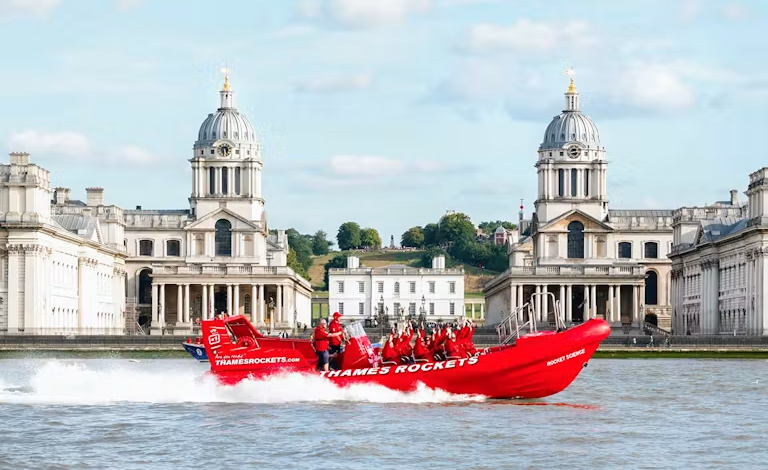
The rigid inflatable boat was invented in the UK in the late 1960s. It was not designed for tourism. The original brief was military and rescue use, combining the structural integrity of a hard fibreglass hull with the safety and buoyancy of inflatable tubes along the sides. The result was a vessel that could operate in conditions that would stop other small craft, carry significant loads, and remain stable at speeds that traditional rigid hull designs struggled to sustain. The Royal National Lifeboat Institution adopted it. The Special Boat Service adopted it. The coastguard adopted it. Then, at some point in the decades that followed, people realised that a boat designed for rescues and military operations in difficult conditions was also an exceptionally good platform for exploring coastline at speed.
That transition from utility to adventure is the story of how the RIB became the defining vessel of power boat adventures in the UK, and why the country that invented it has some of the most varied and compelling powerboating experiences in the world.
What a RIB Makes Possible
The characteristics that made the RIB appealing to the military are the same ones that make it so useful for coastal exploration. A well-built 7 metre RIB running at 30 knots draws very little water, which means it can approach coastline that no keeled vessel gets near. Sea caves accessible only at specific states of tide. Shallow coves behind headlands that deflect the swell enough to allow a careful approach. Rock arches and stacks that are fifty metres offshore but completely inaccessible from the cliff path above. The RIB reaches all of these, and does it quickly enough that a two-hour trip covers ground that a traditional sailing passage would spend most of the day getting to.
The Pembrokeshire coast in Wales illustrates this better than almost anywhere else in the UK. The coastline between St Davids and Tenby contains some of the most dramatic sea caves, blow holes, and rock formations in Britain, including the Green Bridge of Wales, a natural limestone arch 24 metres above sea level formed by centuries of wave erosion. Most of it is only visible from the water. Power boat adventures running out of Pembrokeshire’s small harbours cover this coastline in sessions that deliver more of it than a week of coastal walking would reveal.
In the Scottish Borders, power boat tours operating out of Eyemouth and around St Abbs Head move through water where puffins, gannets, guillemots, razorbills, grey seals, harbour porpoises, and occasionally minke whales share the same stretch of coastline. St Abbs Head National Nature Reserve rises 100 metres above sea level at its highest point and contains one of the most important seabird colonies on the east coast of Britain. From a RIB at sea level, the scale of the cliff face and the density of the bird life registers in a way that the clifftop view simply does not.
See also: Top Reasons to Upgrade Your Home Windows With Blinds
The Power Boat Course That Makes It Independent
The RYA National Powerboat Scheme is the recognised training framework in the UK, and the Level 2 certificate is the core qualification that opens up independent powerboating. It runs over two days and covers close quarters boat handling, high speed planing, man overboard recovery, collision regulations, passage planning, and engine management. No prior experience is required. Children aged 12 and above can join adult courses.
The certificate forms the basis for an International Certificate of Competence, which most European countries require for chartering or skippering a boat. Many coastal operators in Greece, Croatia, and Spain will not hand over keys without it, which makes the two-day investment considerably more useful than a single trip would suggest.
Beyond Level 2, the Intermediate course adds tidal navigation and coastal passage planning. The Advanced course covers night navigation and carries a commercial endorsement qualifying the holder to operate professionally up to 20 miles from a safe haven. The VHF radio certificate and a valid first aid qualification are both prerequisites for the Advanced course and each takes a single day to complete.
adventuro lists power boat adventures and power boat courses across the UK at adventuro.com, covering guided coastal experiences and RYA training from Cornwall to Scotland.
The boat designed for rescue operations in difficult conditions turns out to be an excellent way to explore a coastline. That is the kind of accidental logic that tends to produce the best things.